
Architect vs. Designer vs. Builder – Who Does What?
If you’re planning a major renovation or building a custom home in Toronto, you’ve probably heard conflicting advice:
“Start with an architect.”
“No, hire a designer first.”
“Find your builder before anything else.”
It’s confusing.
And that confusion is one of the biggest reasons renovation projects run over budget, over schedule, and over stress.
The truth? Each professional plays a distinct role and your project works best when you understand how those roles fit together and assemble the whole team early.
Let’s break it down clearly and simply so you can move forward with confidence.
Why This Matters in Toronto
Renovating in Toronto isn’t the same as renovating in a small town.
We deal with:
- Strict zoning bylaws
- Heritage considerations in certain neighbourhoods
- Committee of Adjustment approvals
- Tight urban lot lines
- Permit backlogs
- High construction costs and labour demand in Toronto
Because of these complexities, assembling the right team in the right order, is one of the most important decisions you’ll make.

1. The Designer: How You Live in the Space
Most homeowners assume a designer “picks finishes.”
That’s actually the smallest part of what a good designer does.
A designer begins with your lifestyle.
They ask questions like:
- How does your family move through the house each day?
- Where do backpacks land?
- How do you cook?
- Do you entertain often?
- What frustrates you about your current layout?
From there, they shape the flow of your home — the kitchen layout, storage solutions, lighting placement, cabinetry design, and how rooms connect.
Why It’s So Important
You can have a structurally perfect house that still feels awkward to live in.
Common issues we see when design is rushed or undervalued:
- Cabinet doors colliding
- No outlet where you charge your phone
- Poor lighting placement
- Tight walkways in high-traffic areas
- Wasted space in transitional zones
A thoughtful designer prevents these everyday frustrations before they’re built into the walls.
A Real Example
On a recent Toronto renovation, homeowners wanted a larger kitchen. Instead of adding square footage (which would have triggered zoning challenges), the designer reworked an underused back entry and reallocated space.
The result? A kitchen four feet wider without changing the structural footprint.
That’s smart design.

2. The Architect: Making It Legal, Structural & Buildable
Once the vision and interior flow are clarified, the architect formalizes the structure.
In Toronto, this step is critical.
You cannot simply draw up plans and begin construction. For major renovations and custom homes, you need:
- Permit-ready construction drawings
- Code compliance
- Structural coordination
- Zoning review
- Often, engineer involvement
- A licensed professional to stamp the drawings
What Architects Really Do
Architects focus on:
- Exterior massing and curb appeal
- Structural integrity
- Spatial planning at a macro level
- Navigating zoning setbacks and height restrictions
- Coordinating with structural engineers
- Preparing and submitting permit drawings
In neighbourhoods like The Kingsway, Rosedale, or Leaside, zoning restrictions and lot coverage rules can significantly affect what you’re allowed to build. An experienced architect understands how to design within those constraints.
Why It Matters
Without this technical foundation, your project can stall in permit review, or worse, be denied.
A designer helps you live beautifully.
An architect ensures it stands safely and legally.

3. The Builder: Budget, Execution & Reality
This is where drawings become reality.
But a good builder’s value begins long before construction starts.
What Builders Actually Do
- Develop preliminary budgets during design
- Identify cost drivers early
- Flag constructability concerns
- Build realistic timelines
- Coordinate trades and materials
- Manage inspections
- Oversee quality control
- Handle site conditions unique to Toronto (tight access, parking limitations, neighbor coordination)
Why Early Builder Involvement Is Critical
One of the most common mistakes homeowners make is hiring a designer and architect, completing full drawings, and then sending them out for pricing.
The problem?
No one checked the design against the budget while it was evolving.
That’s when homeowners receive quotes that are 20–30% higher than expected.
When a builder is involved during design development, we can:
- Offer cost guidance in real time
- Suggest alternative materials or construction methods
- Identify expensive structural choices early
Prevent “budget shock” at tender stage
A Toronto Example
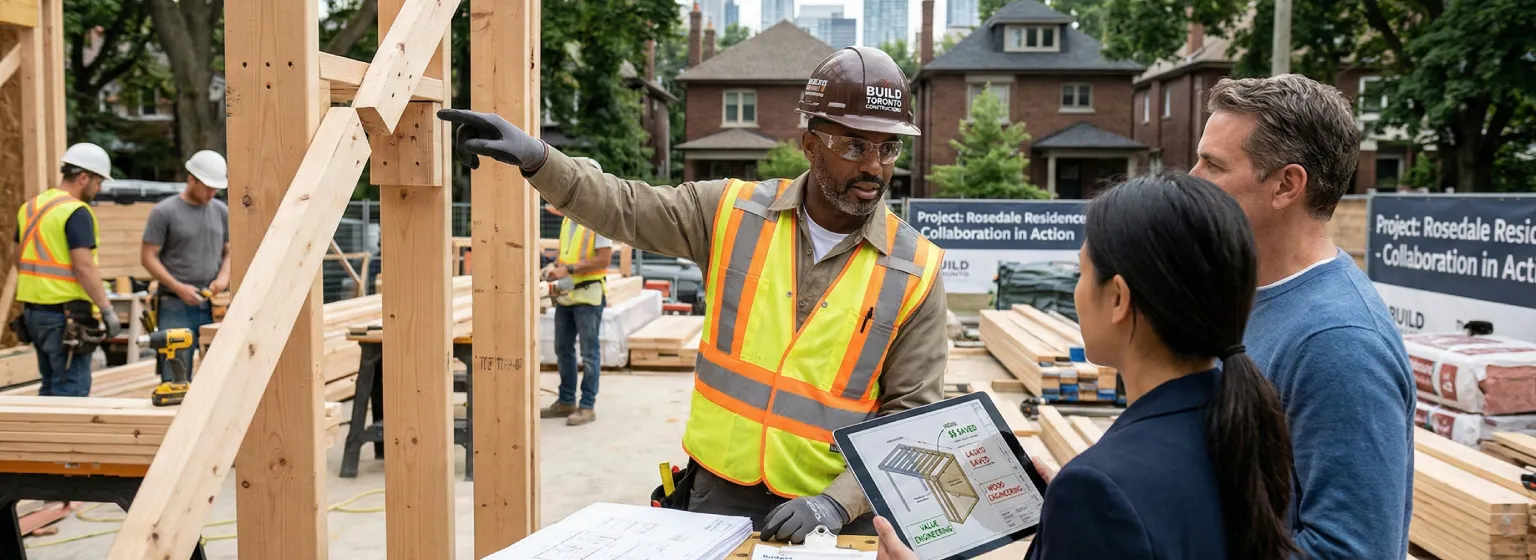
On a Rosedale project, an architect specified a custom steel canopy. It was beautiful but significantly over budget.
Because we were involved early, we re-engineered it in wood, achieved the same visual impact, and saved tens of thousands of dollars.
That’s collaboration working properly.
The Ideal Order: How These Roles Work Best Together
Think of your renovation team as a triangle:
- Designer → Defines how you live in the space
- Architect → Makes it structurally sound and permit-ready
- Builder → Keeps it aligned with budget and builds it properly
The strongest projects happen when all three communicate early – not in silos.
When that triangle forms from the beginning, you gain:
- Fewer surprises
- Faster approvals
- Realistic budgets
- Better value engineering
- Smoother construction
- Fewer change orders
The Real Cost of Getting It Wrong
Most renovation stress doesn’t start during construction.
It starts months earlier when design decisions are made without cost awareness.
If the designer pushes a vision, the architect draws it beautifully, and the builder only sees it at pricing stage, someone has to deliver bad news.
That dynamic is stressful for everyone, especially you as the homeowner.
Common mistakes Toronto Homeowners make
- Hiring professionals in isolation
- Locking drawings before budget validation
- Underestimating permit timelines
Early integration prevents that.
Final Thoughts for Toronto Homeowners
Designers create the feel and function.
Architects make it legal and structurally sound.
Builders make it real and keep it on budget.
They are not interchangeable.
They are complementary.
If you’re preparing for a major renovation or custom build in Toronto, take the time to assemble your team thoughtfully. The earlier collaboration happens, the smoother your journey will be.
And in a city with complex regulations, tight lots, and premium construction costs, that coordination isn’t optional, it’s essential.
If you’re considering a renovation or custom home and want guidance on assembling the right team from day one, contact Glenaden Homes for expert support on your renovation journey in Toronto.
A great build doesn’t happen by accident – it happens by alignment.
Daniel Burrows, owner of Glenaden Homes, has over 23 years of experience building and renovating high-end homes in Toronto’s most established neighbourhoods.

![Credit all project photography to Roy Belding Photography. Suggested alt text pattern: "The Annex renovation by Glenaden Homes – [room/feature] – 2026 RenoMark Awards GTA finalist."](https://glenadenhomes.com/wp-content/uploads/2026/08/Recognized-for-Renovation-Excellence-ff3e490f-1-300x201.png)


